Apple Homekit compatible water leak sensor
A few days ago I had appendicitis surgery. Yeah, at my age, I thought it was something that happened to the teenagers… but no, it also happens to adults! The thing is, during the two days I was in the hospital until I was discharged, my parents were home with the babies and the second day They called me to tell me I had the closet under the sink with 2 fingers of water., so Today I’m going to tell you about an Apple Homekit-compatible water leak sensor. So, if you have an appendicitis operation, you will be given the procedure of calling the plumber: D
There are several models of Homekit compatible water escape sensors on the market, some more expensive like This one from Fíbaro or this other Eve wiring, which has a small probe that you carry as far as you want, ideal for places where you can’t put the other sensors as could be wooden boards on the floor or behind the wall.
Surely both models will work very well: have very good reviews, do not need a concentrator and are from very reliable manufacturers. But 50 €for a water leak detector that you expect is that I NEVER have to tell you because I see it a little expensive. Don’t you think? So in my case, and Since I already have the Aqara hub and I don’t have to make additional investment, I bought 2 units from Aqara Smart Home Water Sensor which costs the 12 €friolera in Gearbest!
Apple Homekit compatible water leak sensor
The sensor itself is the size of a coin of 2 €, probably a little bigger but not much more. It works in batteries, so you don’t need to pull a cabling probe or any of that as we said in Eve’s model:
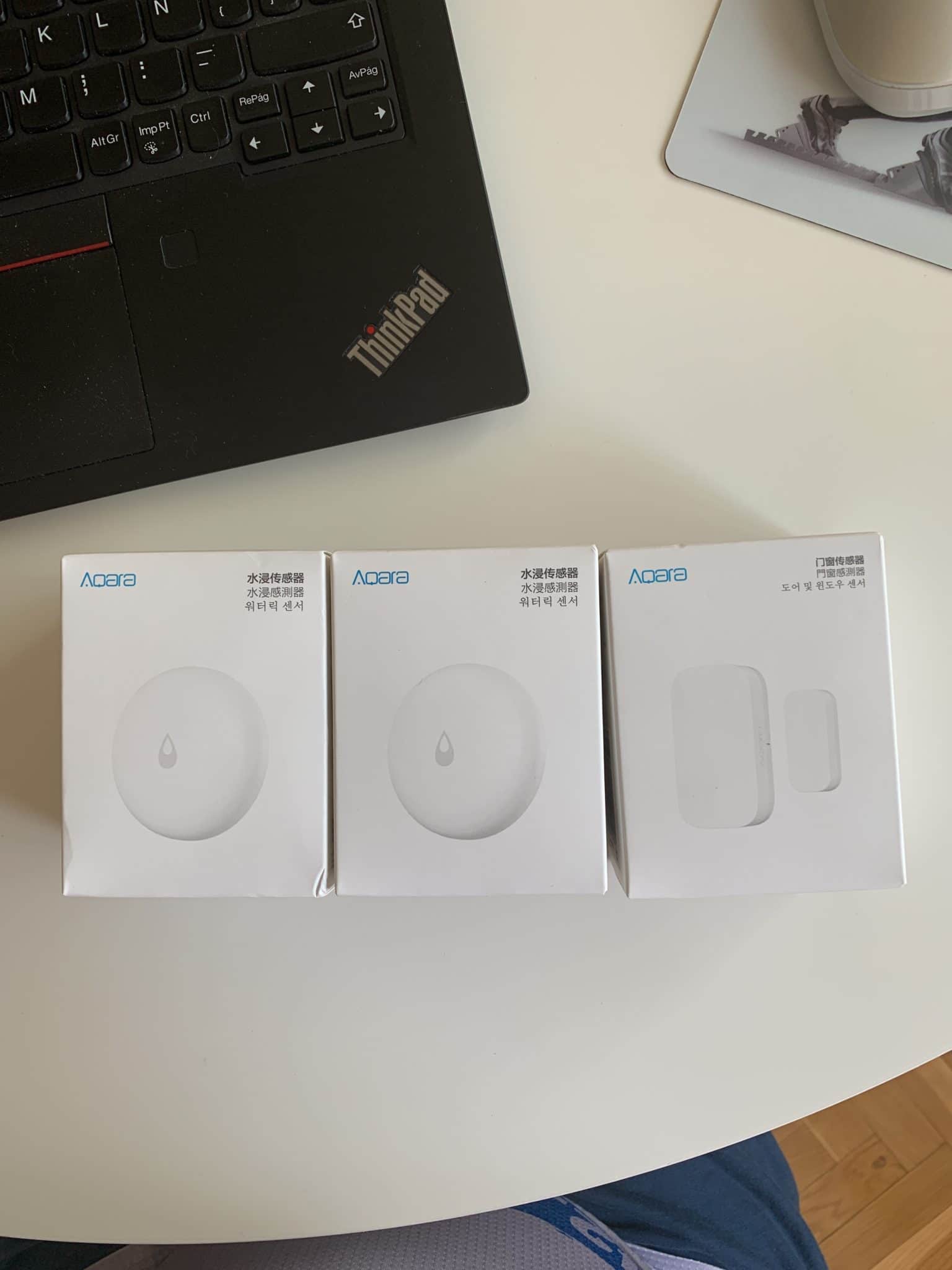

In my case, I put one in the closet under the sink and one behind the washing machine. which shares a pipe with the dryer, so if one of us gets out, I’ll get the alarm. I will surely forget that both sensors are there until they raise an alarm for any reason (or because they are running out of stack), which is exactly what I was looking for, so it doesn’t hurt so much to spend the €24 instead of the other models discussed.
Also, if you already have the Aqara concentrator as we have commented in other entries, you have to do nothing but add it like any other device and tell him where it is located. You do not need any configuration: if you detect water above (splash) or below (have pool sensors) you will raise an alert in the application Xiaomi Home or Aqara’s on any platform. In addition, if you are Apple Homekit users and have all the devices in the Home App, it will also show you the alarm on the Apple platform.
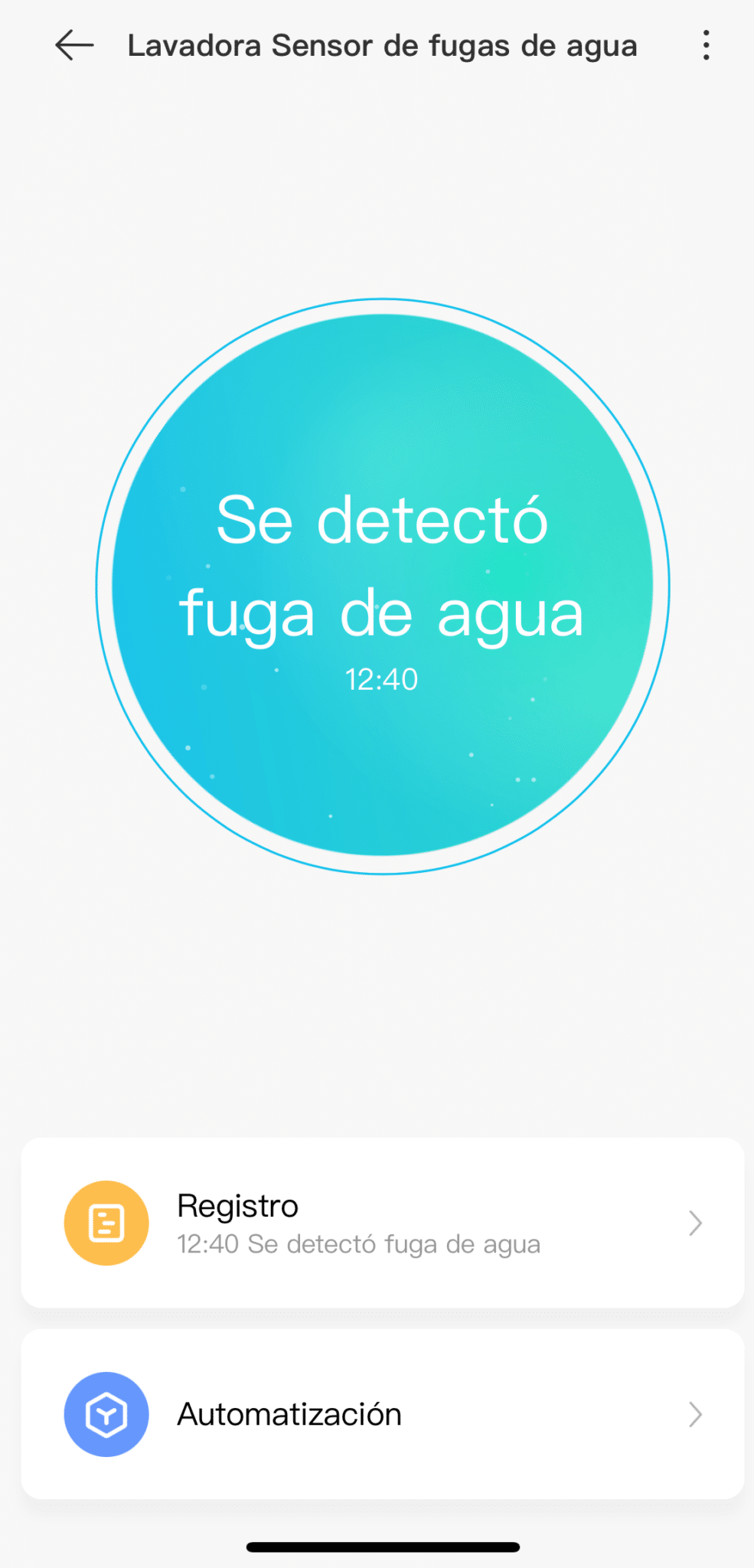
The alarm and its automations
The basic idea of having an alarm in case a water leak is detected is very good… but we can automate this alarm as we want. We can make the built-in alarm sound with the Aqara concentrator. (if you have the speaker version, of course); or We could also make the home lights turn blue! As always, the limit is in the imagination, the desire to get complicated And your partner’s patience.
A partner of Telegram’s group He commented that the pass key could be changed to a connected one to close the tap in case the sensor detected water But this all makes automation more important. If it were a holiday home where I’m going to be very little time after the year, it would still make more sense to prevent you from having ducks living in the dining room when you get there on August 1, but that’s not my case. However, I give you a couple of solutions to do this. a good one and a lowcost 🙂
The good solution (and more expensive) is to adapt an irrigation sensor to the tap to open and close the water. Normally it would always be open but, if the water leak sensor detects something, we close the tap. I could do it without trouble in the tap of the washing machine… in fact, I could cut the light from the washing machine in case it is in motion at the time, as they say that if the water is cut you can get to spoil the washing machine (I think it’s a legend because it only turns around, at most the dirty clothes will come out). We could do this with the device. Eve Aqua, also compatible
with Homekit for about 80 euretes of nothing.
The cheap option is to take a Shelly 1 (10 €), flashing it to be compatible with Homekit as we had in this other entryand connect it to a conventional electrovalve (about 15 €are in Leroy Merlin, for example). In this way we could also open and close the water by detecting leakage. It’s less elegant, but much more fun to ride.
Compatible with Apple Homekit
As we said before, absolutely nothing needs to be done to make the sensor appear in the Cas app a. It may seem in plain sight that it does not appear as it does not like any other sensor, but that We’ll have to go to the room where we set them up so they can show us up as alarm sensors.:
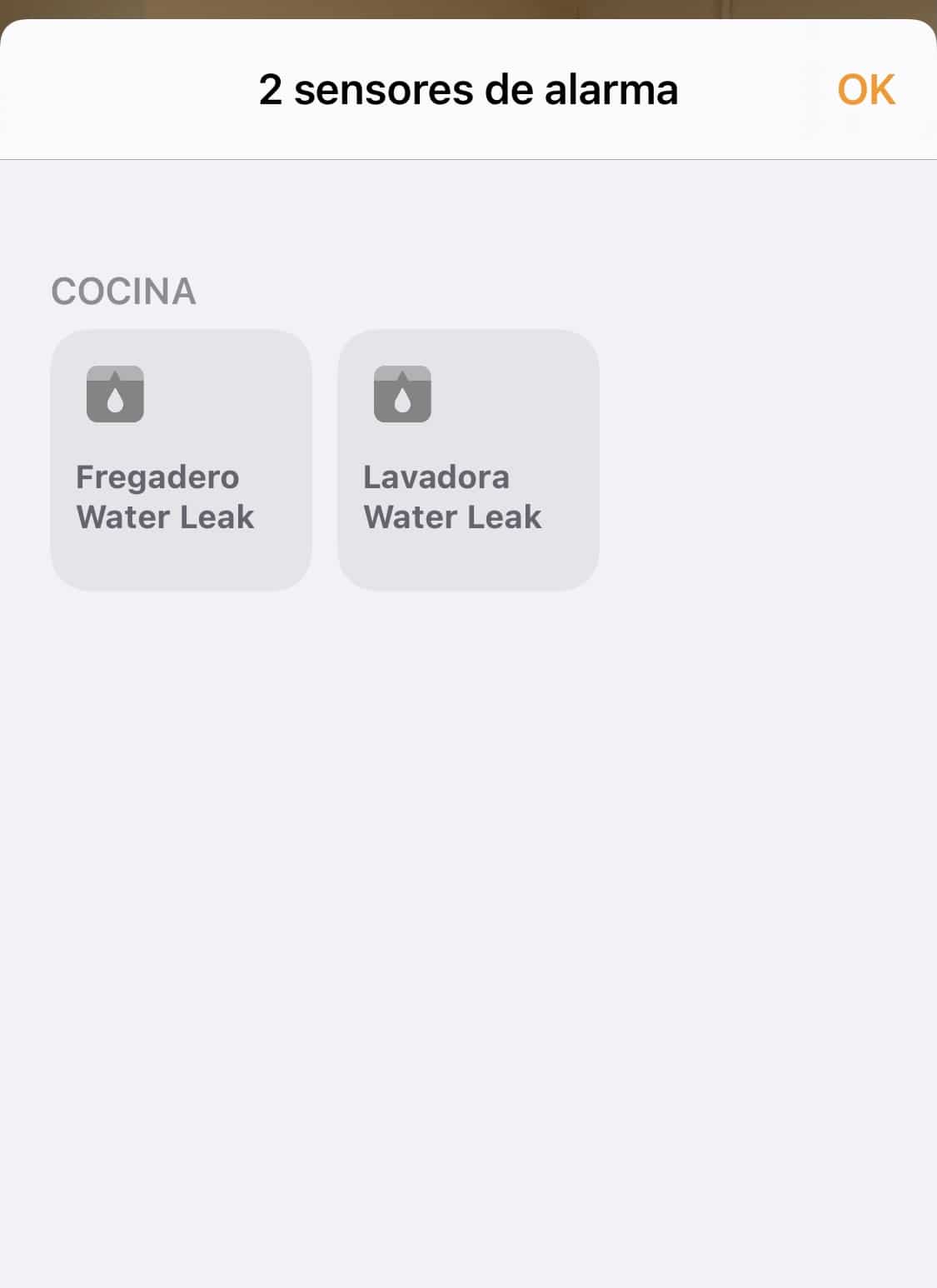
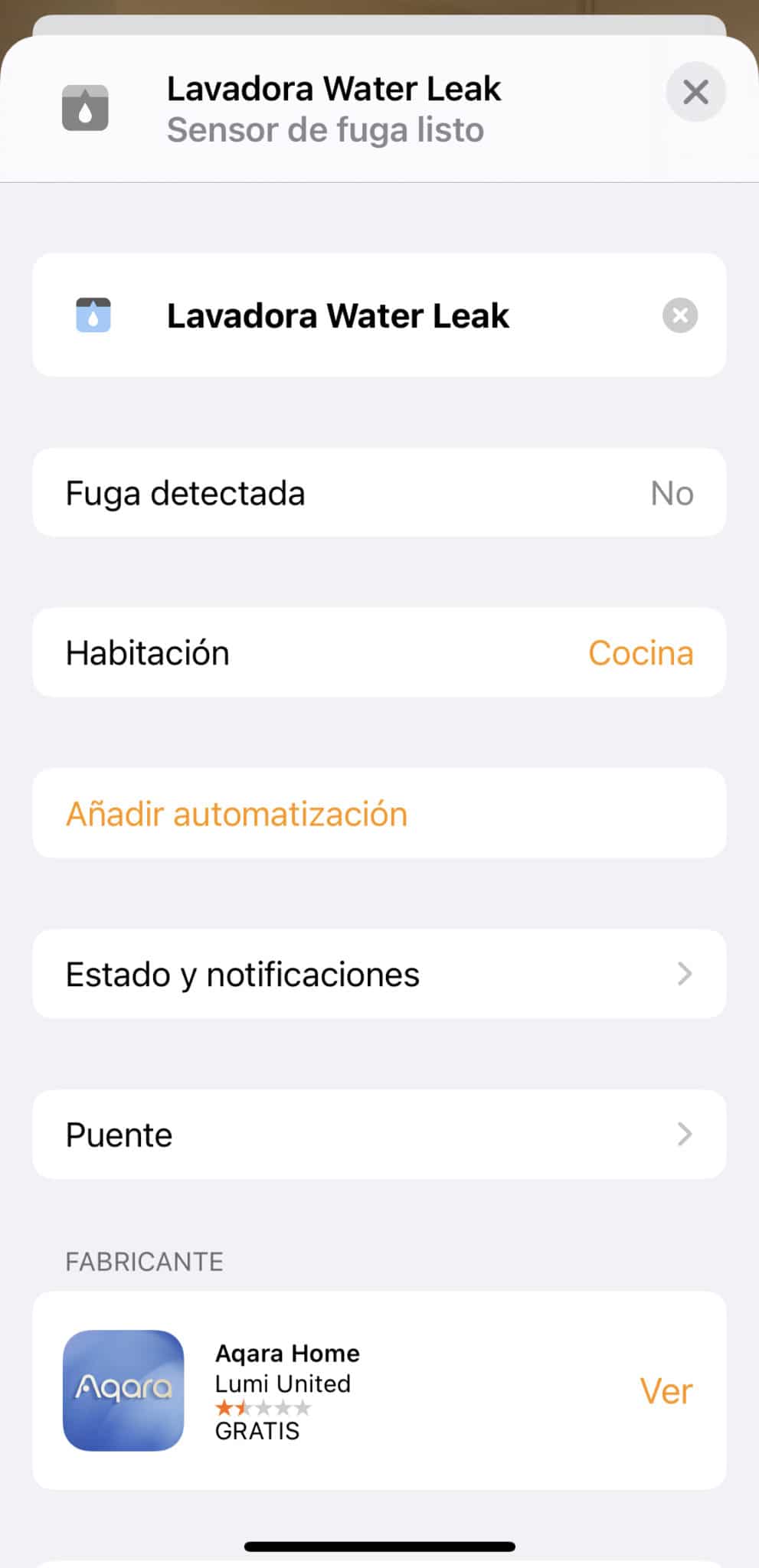
And obviously there is little more to do with them as they lack configuration… if they detect water, the alert will come, but we can forget about the cacharritos until someone finds them cleaning them and ask us what it is.
As I said, a very good purchase for 12 €that has worked very well during the tests but that I hope I never have to use. wp: block {«ref»: 1612} /